

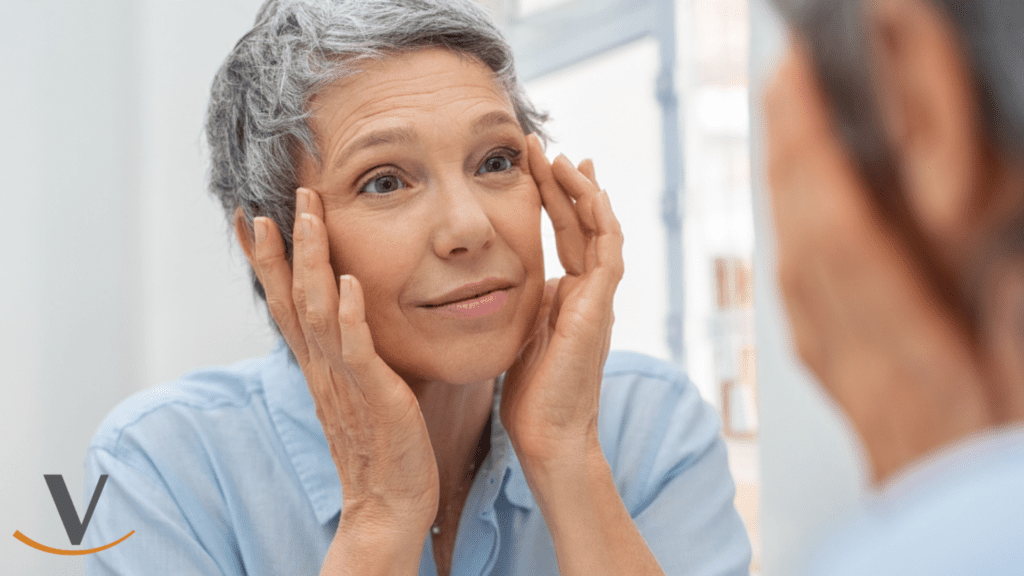
Healthy, glowing, wrinkle and blemish-free skin is something we take for granted when we’re young. As we age, retaining that youthful glow is more challenging.
This is partly the result of the natural aging process, and partly due to accumulated exposure to environmental toxins. Add in stressors like poor diet and gut health, dehydration, UV rays, and dry and cold air, the skin becomes noticeably duller and more damaged over time. However, rejuvenating your skin doesn’t have to be expensive or rely on invasive procedures. Below are five steps to achieve healthy, glowing skin naturally…because beautiful skin starts from within!
1. Stay hydrated
Most people know to put moisturizer on dry skin, but it’s equally important to hydrate the skin from within. However, staying adequately hydrated affects every cell in your body, including your skin. Studies show that drinking enough water improves skin density and improves blood flow to skin.
Here are some quick tips on staying hydrated:
- Drink enough throughout the day. Although adequate amounts vary by individual, you should aim for about two to three liters a day.
- If you have trouble remembering to drink your water, invest in an eco-friendly stainless steel bottle so it’s always with you, even on-the-go.
- Don’t like the taste of water? Add a bit of lemon juice to help make water more palatable (plus it adds a little antioxidant boost!)
- Stay hydrated with fruits and vegetables! Include foods with high water content like leafy greens, strawberries and cucumbers which contribute to skin health.
2. Protect your gut health and eat a nutrient dense diet
Good skin is also linked to your gut. Many conditions, including acne, psoriasis, and eczema, can be linked to bacterial imbalances in the microbiome. How does this work? In simple terms, hormones greatly impact your skin, and they are metabolized in your gut. So, when your gut can’t do its job, you’re at risk of hormonal imbalances. This is why balance is so important to the microbiome, and an overabundance of “bad” bacteria increases inflammation throughout your body, particularly on your body’s largest organ – your skin.
Restoring healthy bacterial balance reduces inflammation and also helps to regulate hormones. Focus on whole, natural foods, and eliminate processed foods. In particular, omit foods high in trans fat, sweets, and fried foods. Also, alcohol can wreak havoc on your gut and lead to dehydration. (Too much vino is not your best plan for healthy glowing skin!)
3. Tips for proper diet and gut healthy inclusions:

omega-3 fatty acids
Foods high in omega-3 fatty acids like salmon, many kinds of nuts, and flax seeds. Omega-3 can help protect your skin from harmful UV rays. Healthy fats also contribute to smoother, more supple skin, according to research.

beta carotene
Foods high in beta carotene, like sweet potatoes, carrots, and bell peppers, can help protect your skin from sun damage. Beta carotene is an antioxidant, which means it neutralizes damaging free radicals and reduces oxidative stress that leads to inflammation. Another carotenoid called lutein also contributes to skin health. It is found in brightly colored produce like broccoli and tomatoes. One interesting study of 800 women found women who ate a lot of green and yellow vegetables even had fewer wrinkles and healthy, glowing skin.

vitamin C
Foods high in vitamin C are associated with more youthful skin. It’s also needed to produce collagen, which is the protein that keeps your skin in good shape. Brightly colored fruits and vegetables, citrus fruits and leafy greens are full of beneficial vitamin C.

probiotics
Be sure to also include probiotic-rich food and beverages like kefir, kombucha, tempeh, kimchi and sauerkraut which add to the good bacteria that keep your microbiome in top shape.
4. Remove Sensitivities
Achieving a healthy gut starts with understanding your gut imbalances as well as removing food sensitivities. This is a common issue, which can lead to further inflammation even when eating healthy foods. Ready to get to the bottom of your less than glowing and healthy skin? Our clinical nutrition testing determines what’s really going on in your gut. We create a treatment plan unique to the needs of your body. Based in science, not on feelings–– We can help!
5. Create a skin-friendly lifestyle
Supplement with collagen
Collagen is an abundant protein found and made in the body. Repeated studies have found that collagen improves the skin’s elasticity and reduces the appearance of wrinkles. As we age, our bodies naturally start to produce less collagen, which becomes a major contributor to dry skin, loss of volume and wrinkles. Collagen can also be sourced from animal products such as fish, chicken and beef bone broth, and can also be found in supplement form. Tip: Add collagen powder to your morning smoothie and never look back!
Gua Sha
This traditional chinese healing method uses a scraping tool on lubricated skin in certain fluid motions to help increase circulation. One study noted a decrease in blemishes after one week while another pilot study reported increased microcirculation to the areas treated. While not all “beauty treatments” deliver what they promise, the ancient technique of Gua Sha may be a healthy add on to your skin regimen!
Facial acupuncture
An easier, typically much cheaper alternative to injections, facial acupuncture offers myriad benefits with minimal side effects. It’s thought that acupuncture can improve circulation and stimulate collagen production, resulting in a brighter complexion and smoother skin. And, by improving circulation and detoxifying, acupuncture is also an effective treatment for acne, psoriasis, and eczema.
Sleep and exercise
Sleep and exercise both impact your skin. Moderate exercise increases blood flow and stimulates antioxidant production, which slows the aging process. The connection between skin health and sleep is not always apparent but there’s a reason we call it “beauty sleep.” Studies show that even one night of missed sleep can impact the quality of your skin. Tip: Aim to get 7 – 8 hours of quality restful sleep each night and set aside time in your day for exercise to maintain youthful and glowing skin!
Start on the path to glowing skin the natural way, by addressing it from within. If you’d like to get started on a plan to look and feel your best, give us a call!
Sources
- Wipke-Tevis DD, Williams DA. Effect of oral hydration on skin microcirculation in healthy young and midlife and older adults. Wound Repair Regen. 2007 Mar-Apr;15(2):174-85. doi: 10.1111/j.1524-475X.2007.00202.x. PMID: 17352748.
- Pilkington S.M., Rhodes L.E. (2010) Omega-3 Fatty Acids and Skin. In: Krutmann J., Humbert P. (eds) Nutrition for Healthy Skin. Springer, Berlin, Heidelberg. https://doi.org/10.1007/978-3-642-12264-4_9
- Black HS, Rhodes LE. Potential Benefits of Omega-3 Fatty Acids in Non-Melanoma Skin Cancer. J Clin Med. 2016;5(2):23. Published 2016 Feb 4. doi:10.3390/jcm5020023
- Nagata C, Nakamura K, Wada K, Oba S, Hayashi M, Takeda N, Yasuda K. Association of dietary fat, vegetables and antioxidant micronutrients with skin aging in Japanese women. Br J Nutr. 2010 May;103(10):1493-8. doi: 10.1017/S0007114509993461. Epub 2010 Jan 20. PMID: 20085665.
- Proksch E, Segger D, Degwert J, Schunck M, Zague V, Oesser S. Oral supplementation of specific collagen peptides has beneficial effects on human skin physiology: a double-blind, placebo-controlled study. Skin Pharmacol Physiol. 2014;27(1):47-55. doi: 10.1159/000351376. Epub 2013 Aug 14. PMID: 23949208.
- Crane JD, MacNeil LG, Lally JS, Ford RJ, Bujak AL, Brar IK, Kemp BE, Raha S, Steinberg GR, Tarnopolsky MA. Exercise-stimulated interleukin-15 is controlled by AMPK and regulates skin metabolism and aging. Aging Cell. 2015 Aug;14(4):625-34. doi: 10.1111/acel.12341. Epub 2015 Apr 22. PMID: 25902870; PMCID: PMC4531076.
- Tina Sundelin, MSc, Mats Lekander, PhD, Göran Kecklund, PhD, Eus J. W. Van Someren, PhD, Andreas Olsson, PhD, John Axelsson, PhD, Cues of Fatigue: Effects of Sleep Deprivation on Facial Appearance, Sleep, Volume 36, Issue 9, 1 September 2013, Pages 1355–1360, https://doi.org/10.5665/sleep.2964
- Lam CT, Tse SH, Chan ST, Tam JK, Yuen JW. A survey on the prevalence and utilization characteristics of gua sha in the Hong Kong community. Complement Ther Med. 2015 Feb;23(1):46-54. doi: 10.1016/j.ctim.2014.12.002. Epub 2014 Dec 31. PMID: 25637152.
- Nielsen A, Knoblauch NT, Dobos GJ, Michalsen A, Kaptchuk TJ. The effect of Gua Sha treatment on the microcirculation of surface tissue: a pilot study in healthy subjects. Explore (NY). 2007 Sep-Oct;3(5):456-66. doi: 10.1016/j.explore.2007.06.001. PMID: 17905355.